
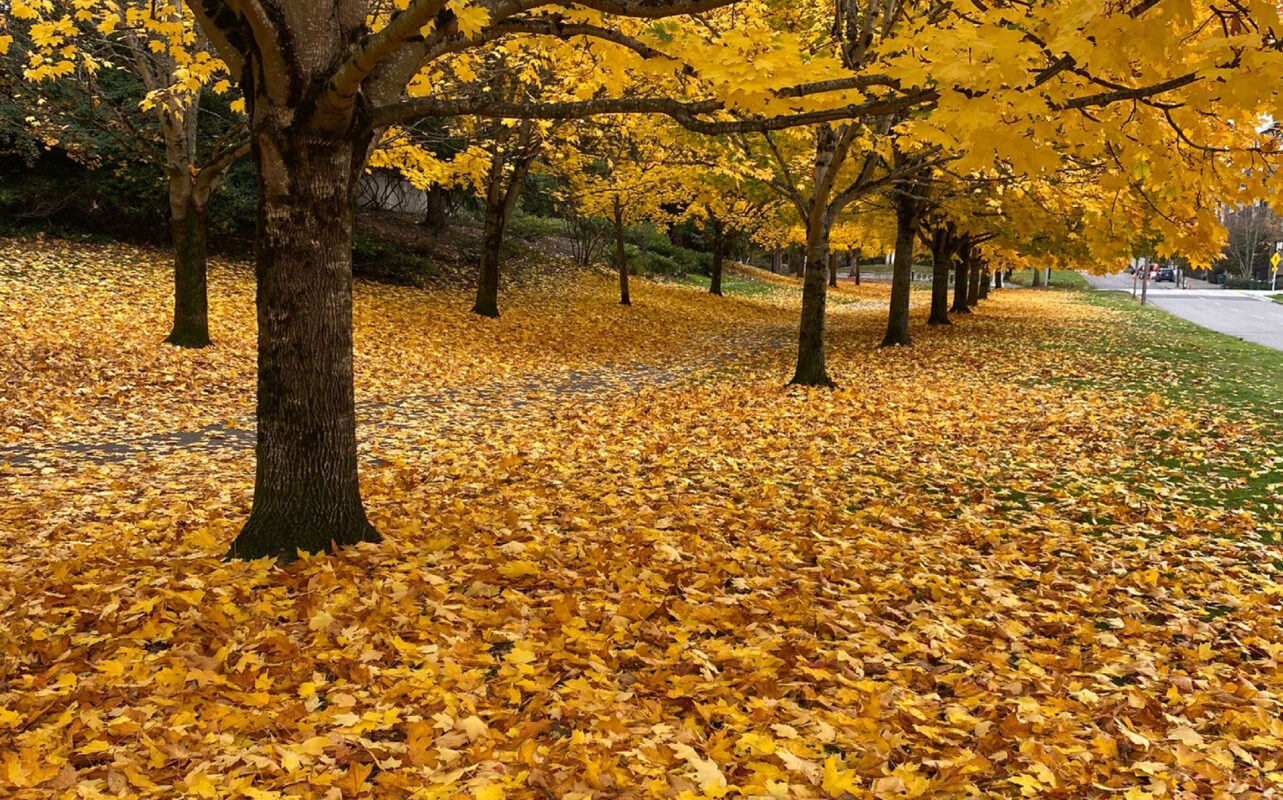
Commercial fall landscape maintenance looks different as the seasons begin to change across the Pacific Northwest. Mowing starts to slow, leaves begin coming down, rainfall increases, and colder temperatures aren’t far behind.
For property managers, HOAs, and multifamily communities, this seasonal shift also means a change in what your landscape needs.
The focus moves from keeping up with summer growth to managing leaves, monitoring drainage, protecting turf, winterizing irrigation, and preparing the property for the wetter months ahead.
Leaf Cleanup Becomes a Moving Target
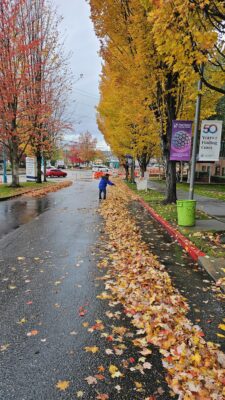
Anyone who manages a property with mature trees knows that leaf cleanup is rarely a one-and-done job. During peak leaf drop, a property can look completely different just a few hours after a service visit. Beyond appearance, leaves can cover turf, create slippery walkways, and clog catch basins and drains.
The goal is consistent cleanup throughout the season, keeping debris under control as leaves continue to fall.
Mowing Slows Down, but Landscape Care Doesn’t
As temperatures cool, turf growth slows and mowing becomes less frequent. But that doesn’t mean there is less to pay attention to.
Wet or saturated turf can be damaged by unnecessary mowing and equipment traffic, so conditions matter. When weather allows, a final seasonal mow can help leave turf in good shape heading into winter. Fall can also reveal thin turf, moss, high-traffic wear, and drainage issues that may have been less noticeable during summer.
Fall Rain Reveals Drainage Problems
There is one advantage to weeks of Pacific Northwest rain; it makes drainage problems pretty easy to find. Standing water, overflowing catch basins, erosion, saturated planting beds, and water collecting along sidewalks are all signs worth paying attention to.
Sometimes the solution is as simple as clearing leaves and debris from a drain. Other times, recurring standing water may point to a larger grading or drainage issue.
This is also a good time to check gutters, downspouts, catch basins, and drainage lines. It’s not enough for each component to be clear, the water needs somewhere to go once it gets there.
Don’t Forget About Irrigation
It can feel strange to think about irrigation during the rainy season, but fall is when systems need to be prepared for colder temperatures. Water left in exposed irrigation components can freeze and damage pipes, backflow assemblies, and other parts of the system.
Winterization is a relatively small seasonal task that can help prevent a much larger repair when it’s time to turn the system back on in spring.
Good Landscape Maintenance Changes With the Seasons
The seasonal shift is also an opportunity to look beyond routine maintenance.
Where is water collecting? Which areas struggled this year? Are plants becoming overgrown? Are there areas of turf that continue to decline? Is there work that should be planned for winter or spring?
Commercial landscape maintenance shouldn’t look exactly the same twelve months a year. The important part is knowing what’s happening across the property and having a plan for it.
As fall and winter arrive, the priorities change. Leaf management, drainage, turf protection, irrigation winterization, and planning ahead all become part of keeping a property looking good and functioning properly.
A good landscape management partner should recognize that seasonal shift, identify concerns, and help plan for what’s coming next. For a property manager, that means fewer surprises and fewer things you have to catch yourself.